



| IN A NUTSHELL |
|
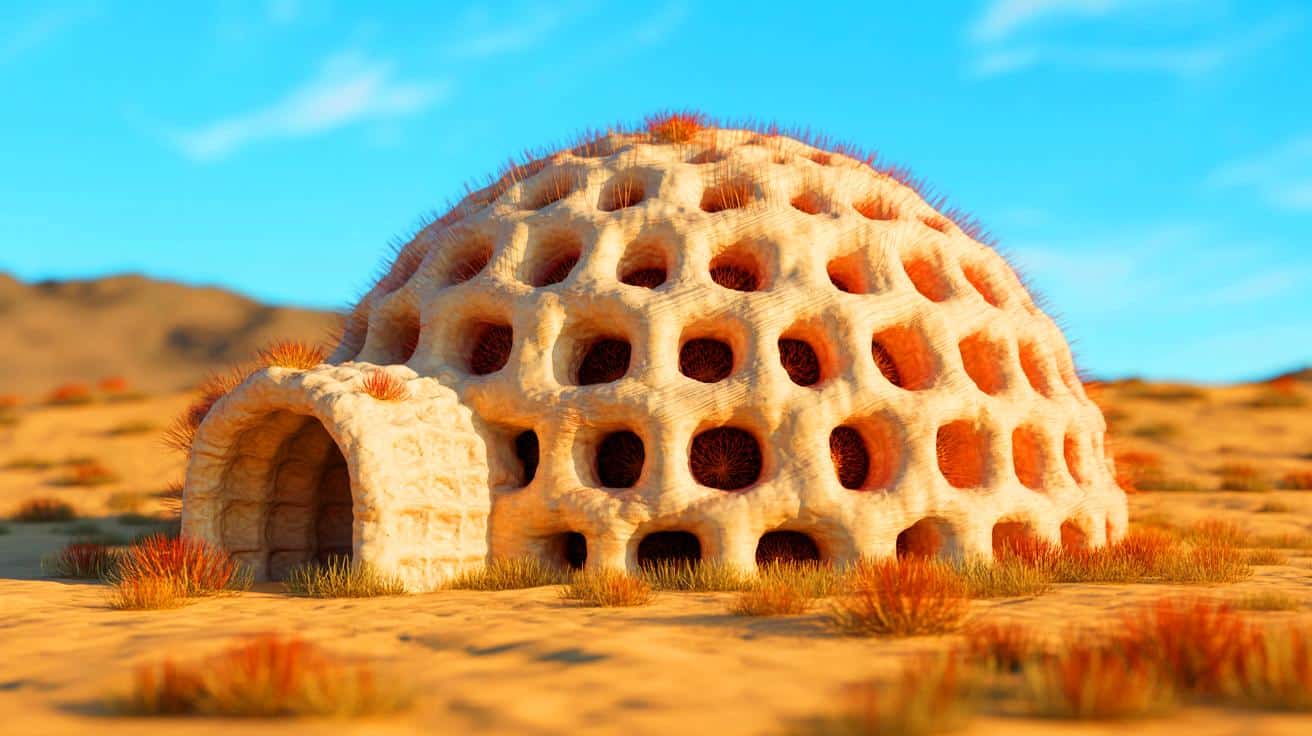
In an era marked by environmental challenges and a growing need for sustainable solutions, a group of architecture students in Germany has taken a bold step forward. Through their innovative use of mycelium—the root-like structure of fungi—they have developed a mushroom-based igloo, the MyGlu, designed specifically for hot and dry regions. This pioneering project, undertaken at the Frankfurt University of Applied Sciences, promises a new era of low-cost housing that is both eco-friendly and adaptable to various climates. As traditional building resources become scarce or expensive, MyGlu offers a glimmer of hope for sustainable shelter solutions.
Sustainable Shelter Solution
The MyGlu project is a testament to the potential of mycelium as a building material. Unlike conventional materials, mycelium is both lightweight and modular, allowing for easy transportation and assembly. Each component of the MyGlu is grown using mycelium fed on wood waste, making it an environmentally friendly option. The structure not only provides natural insulation but also offers sound-dampening properties, making it ideal for temporary housing in areas affected by climate extremes or humanitarian crises.
Florian Mähl, a professor at Frankfurt UAS, emphasized the importance of integrating mycelium-based construction into academic research. His vision includes expanding studies in this field by investing in the necessary equipment and collaborating with external partners. “We aim to make mycelium a cornerstone of sustainable construction research,” Mähl stated. This innovative approach aligns with global efforts to reduce carbon footprints and adapt to changing environmental conditions.
Innovative Construction Methods
The MyGlu prototype stands out for its innovative approach to construction. By utilizing mycelium, the team has developed a structure that is completely biodegradable and carbon-neutral. This aligns with the growing movement to rethink building materials in response to climate change and supply chain disruptions. Mycelium’s low energy demands and adaptability make it a frontrunner in sustainable construction.
When tested, MyGlu demonstrated impressive thermal and acoustic insulation. The prototype successfully kept interiors cooler in hot climates, a crucial feature for regions experiencing extreme temperatures. Moreover, its sound-dampening capabilities address a significant need in disaster zones or refugee settlements where noise pollution can be a concern. This innovation has not only won the Sustain Award at Frankfurt UAS but also serves as a model for future sustainable housing projects.
“They’re Stealing Sunlight In The Arctic”: Company Builds Impossible Solar Farm Where Sun Disappears
Educational and Environmental Impact
The MyGlu project is more than just a construction innovation; it is also a model of educational excellence. By involving students in cutting-edge research, Frankfurt UAS is fostering a new generation of architects committed to sustainable development. Susanne Rägle, vice president at the university, highlighted the project’s role in advancing several United Nations sustainability goals. “MyGlu demonstrates how climate-neutral construction can be achieved while providing quality education,” she noted.
Astrid Schulte, chair of the Frankfurt Foundation for Research and Education, echoed this sentiment. She praised the project for its CO2-neutral and easily replicable construction method, emphasizing its potential to influence sustainable action across various sectors. This approach not only benefits the environment but also sets a precedent for future educational projects that prioritize sustainability.
The Future of Mycelium-Based Housing
As the world grapples with climate change and resource scarcity, the MyGlu project offers a promising alternative. Its success has sparked interest in mycelium as a viable building material, with potential applications beyond temporary housing. The ability to grow components from waste materials and the biodegradability of the structure make it an attractive option for sustainable development.
Looking ahead, the challenge lies in scaling up production and integrating mycelium-based construction into mainstream building practices. This will require collaboration between researchers, industry leaders, and policymakers. However, the MyGlu project has already laid the groundwork for this transition, showcasing the feasibility and benefits of mycelium as a sustainable building material. With continued research and innovation, could mycelium reshape the future of architecture and construction?


Wow, a house made of mushrooms! 🍄 Does it smell like a forest inside? 😂
Wow, this is like something out of a sci-fi movie! 🌿 How do they make sure it doesn’t decay too quickly?
What an incredible project! This could really change how we think about construction.
Can these mushroom homes be built anywhere, or are they limited to certain climates?
Love the idea, but how do you keep bugs away from a mushroom house? 🐜
Is this material fire-resistant? Safety first! 🔥
How long does it take to grow a mycelium igloo from start to finish?
Thank you for highlighting this project. It’s inspiring to see students leading the way in sustainability.
Does the igloo require special maintenance compared to regular homes?
What a fun concept! But aren’t mushrooms a bit too fragile for a house?
Wow, this is a game-changer for construction in challenging environments! 🏜️
How durable is mycelium in the long run? Can it withstand harsh weather conditions?
Isn’t it risky to rely on mushrooms for construction? What about decay over time?
Are there any plans to commercialize this technology? I’d love to live in a mushroom house! 🏡
How do they ensure the structural integrity of a mycelium-based building?
This could be the future of eco-friendly housing! Can’t wait to see more developments. 🌎
The concept is fascinating, but can it really replace concrete in urban areas?
Is it possible to customize the design of these mycelium igloos?
Seems like a cool idea, but wouldn’t it be difficult to get permits for something like this?
Can they grow these igloos in different shapes and sizes? 🏠✨
Would love to visit sometime! Does the university offer tours of the MyGlu project?
It’s amazing to see students contributing to such important work. Keep it up! 👏
Are there any downsides to using mycelium for construction that we should be aware of?
I hope this gets more attention worldwide. It’s a fantastic step towards sustainable living.
How does the insulation of a mushroom igloo compare to that of a traditional home?
What a unique building material! Could this be the answer to affordable housing issues?
This is a great initiative! Thank you for sharing this innovative idea with us. 🌿
I’m intrigued. How scalable is this project for larger communities or cities?
Interesting concept, but would it withstand heavy rain or snow?
Thank you for the article. It’s exciting to see innovation in sustainable architecture.
Does anyone know if there are similar projects being developed in other countries?
Can you actually live in a mushroom igloo? Sounds like something out of a fairy tale. 🧚
I’m curious, how does mycelium compare to traditional building materials in terms of cost?
I’m amazed by this innovation! Hope they expand it to more countries soon! 🌍
What happens if it rains? Does the mushroom igloo dissolve? 🌧️
The future of sustainable housing is here! Kudos to Frankfurt University of Applied Sciences! 🎉
Is it safe to live in a mushroom house? 🤔
Mushroom houses… are we turning into hobbits? 😄
How do they prevent the igloo from growing mushrooms on the inside?
How long does it take to grow one of these igloos?
Can someone explain how sound-dampening works in a mushroom igloo? 🤔